What Is Affiliate Marketing?
Affiliate marketing is a popular digital marketing strategy that allows individuals, bloggers, content creators, and businesses to earn money by promoting products or services offered by other companies. It is called performance-based marketing because the affiliate generally earns a commission when their promotion results in a sale, lead, click, or another specific action.
In affiliate marketing, there are usually three main parties involved: the merchant, the affiliate, and the customer. The merchant is the company or brand that owns the product or service. The affiliate is the person who promotes that product, and the customer is the person who purchases or uses the product.
When an affiliate joins an affiliate program, the company provides a unique affiliate link. This link contains tracking information that helps the company identify which affiliate referred the customer. The affiliate can then share this link through a blog, website, YouTube channel, social media platform, email, or other online channels.
For example, imagine that you have a blog about technology. You write an article reviewing a smartphone and explain its features, advantages, disadvantages, and price. You then include your affiliate link where readers can find or purchase the smartphone. If a reader clicks your link and completes a purchase, the company tracks the transaction and gives you a commission according to the terms of its affiliate program.
One of the main advantages of affiliate marketing is that affiliates do not need to create their own products. They also usually do not have to manage inventory, packaging, shipping, or customer delivery. Their main responsibility is to attract the right audience, create useful content, and recommend relevant products or services.
Affiliate marketing can be used in many different industries, including technology, fashion, beauty, travel, education, fitness, finance, and software. For example, a fashion blogger can recommend clothing, a technology creator can review gadgets, and a travel website can recommend hotels or travel services through affiliate links.
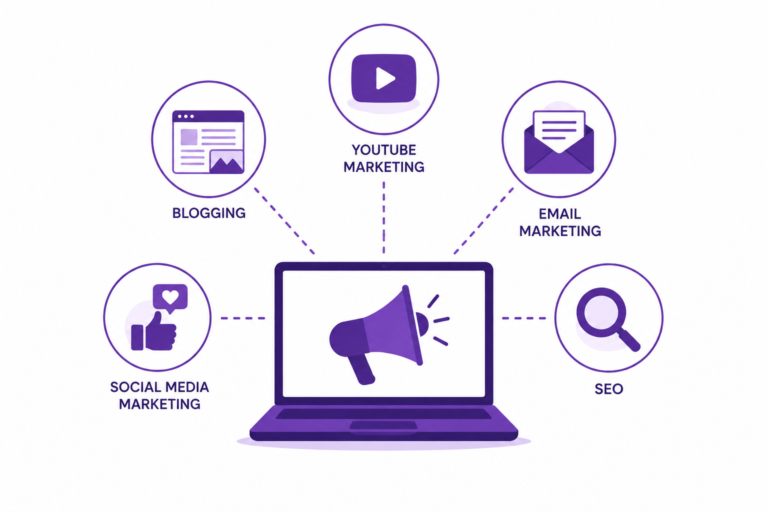
There are several ways to promote affiliate products. Blog articles, product reviews, comparison guides, YouTube videos, Instagram content, social media posts, email newsletters, and SEO-focused websites are some common methods. The best method depends on the affiliate’s niche and target audience.
However, successful affiliate marketing is not simply about sharing links and asking people to buy products. Affiliates need to build trust and credibility with their audience. Providing honest reviews, useful information, product comparisons, tutorials, and solutions to customer problems can make affiliate content more valuable.
The amount of commission an affiliate earns can vary depending on the company, product, affiliate program, and type of action required. Some programs offer a percentage of the product price, while others may provide a fixed amount for a sale or lead.
Therefore, affiliate marketing can be a useful way to generate online income when it is approached with the right strategy. By choosing a suitable niche, promoting relevant products, creating high-quality content, and consistently reaching the target audience, beginners can gradually build an affiliate marketing business.
Simple Example
Suppose you promote a product worth ₹5,000 through your affiliate link. If the affiliate program offers a 10% commission, you could earn ₹500 when a customer purchases the product through your link.
₹5,000 × 10% = ₹500 commission
In Simple Words
Affiliate marketing means promoting another company’s product or service using your unique affiliate link. When someone makes a qualifying purchase or completes the required action through your link, you earn a commission.
1. How Does Affiliate Marketing Work?

Affiliate marketing works through a simple process. First, an affiliate chooses a product or service that is relevant to their audience. They then join the company’s affiliate program and receive a unique affiliate link. The affiliate promotes the product through content such as blog posts, videos, social media posts, or product reviews. When a customer clicks the affiliate link and completes a qualifying action, the affiliate receives a commission.
The basic process is:
Choose a product → Get an affiliate link → Promote the product → Customer clicks the link → Customer purchases → Affiliate earns commission
2. Who Can Become an Affiliate Marketer?
Almost anyone with an online platform and an audience can become an affiliate marketer. You do not necessarily need a large following to begin. Bloggers, YouTubers, social media creators, website owners, and content creators can all participate in affiliate programs.
The important thing is to choose a specific niche and create content that is useful to your target audience. For example, someone interested in fashion can promote clothing and beauty products, while a technology blogger can promote smartphones, laptops, and other gadgets.
3. How Do Affiliate Marketers Make Money?
Affiliate marketers generally earn money through commissions. The commission depends on the affiliate program and the product or service being promoted.
For example, if a product costs ₹2,000 and the affiliate commission is 10%, the affiliate can earn ₹200 from a qualifying purchase.
Some affiliate programs may also pay affiliates for other actions, such as generating leads, registrations, or app downloads.
4. Where Can You Promote Affiliate Products?
There are many online platforms where affiliate products can be promoted. Some common options include:
Blogs and websites
YouTube
Instagram
Facebook
Email newsletters
Pinterest
Online communities
Choosing the right platform depends on where your target audience spends most of their time.
5. Why Is Affiliate Marketing Popular?
Affiliate marketing has become popular because it offers a relatively simple way to start promoting products online without creating your own products. Affiliates can work from anywhere, choose products related to their interests, and potentially create multiple income sources.
However, earning consistent income requires quality content, audience trust, proper product selection, SEO, and continuous effort. It is not an instant way to make money.
6. Example of Affiliate Marketing
Imagine you run a website about digital marketing. You write an article called “Best SEO Tools for Beginners.” In the article, you explain different SEO tools and provide affiliate links to the tools’ websites.
If a reader clicks your affiliate link and purchases a subscription, the company may pay you a commission according to its affiliate program.
This example shows how useful content + affiliate links + targeted audience can work together to generate affiliate income.